

YCA media
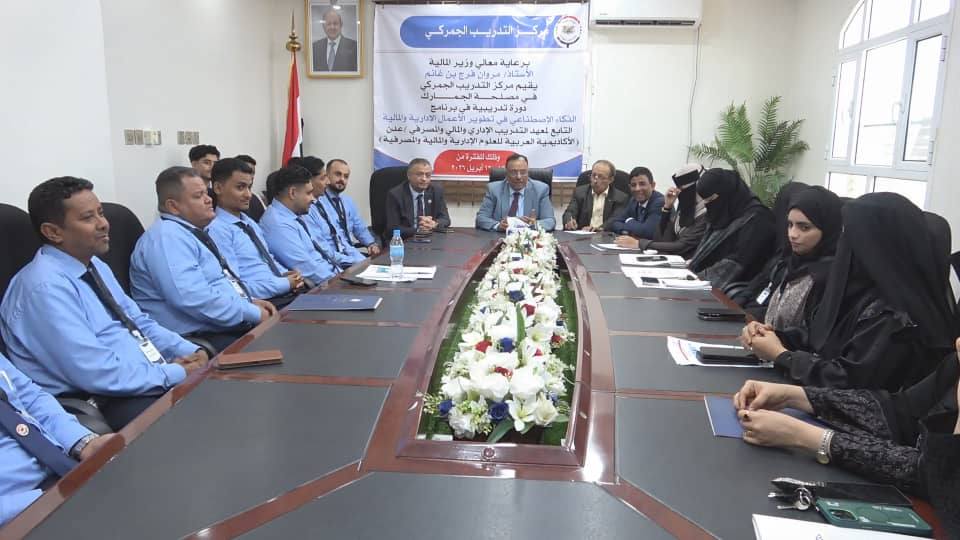
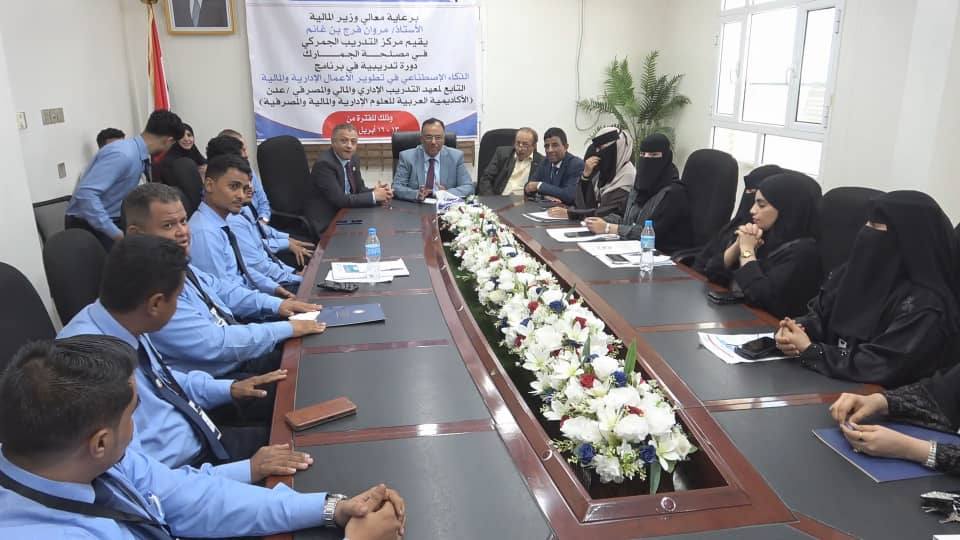
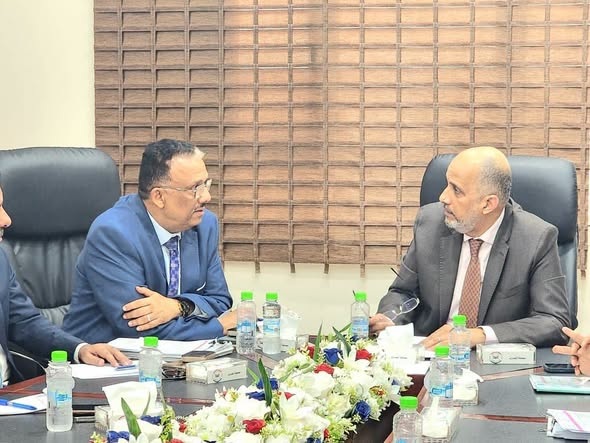
Yemen Customs Authority (YCA) in the interim capital Aden concluded today the training course on the application of artificial intelligence programs in the development of administrative and financial works, which was organized by the Customs Training Center in cooperation with The Arab Academy for Management, Banking and Financial Sciences , in a step that reflects a growing trend towards adopting digital transformation and modernizing institutional work mechanisms in the customs sector, in the presence of YCA Chairman, Mr. Abdulhakim Radman Allkubati.
The course, which lasted from April 13 to 16, targeted 17 male and female employees from various administrative and financial departments. The course focused on providing participants with the knowledge and skills needed to use AI tools to analyze data, automate procedures, and support decision-making, which contributes to raising performance efficiency and accelerating the pace of work.
The training included introducing the most important applications of artificial intelligence in the government work environment, as well as the mechanisms of employing them in improving resource management, enhancing financial control, and reviewing practical examples of modern applications that contribute to reducing human errors and raising the level of accuracy and transparency.
In his speech at the closing ceremony of the course, Mr.Abdulhakim Alkubati, YCA Chairman stressed that the integration of AI technologies into customs work represents a strategic step towards building a modern system capable of keeping pace with economic and technological challenges, noting that digital transformation is no longer an option, but an urgent necessity to improve the quality of services and facilitate procedures for citizens and traders.
He pointed out that the Customs Authority seeks through these training programs to invest in human capital as the main pillar of any development process, pointing out that the next phase will witness the implementation of additional qualitative training programs aimed at expanding the use of modern technologies in various departments.
Alkubati also stressed the importance of transferring the outputs of the course to the actual work environment and applying the skills acquired in a practical manner, in order to achieve the desired positive impact and contribute to enhancing the efficiency of institutional performance and achieving the highest levels of discipline and governance in customs work.
This course is part of a series of efforts by the Customs Authority to modernize its administrative and technical structure and raise the capabilities of its cadres, in line with the rapid technological developments, and enhance its vital role in supporting the national economy and improving the work environment.
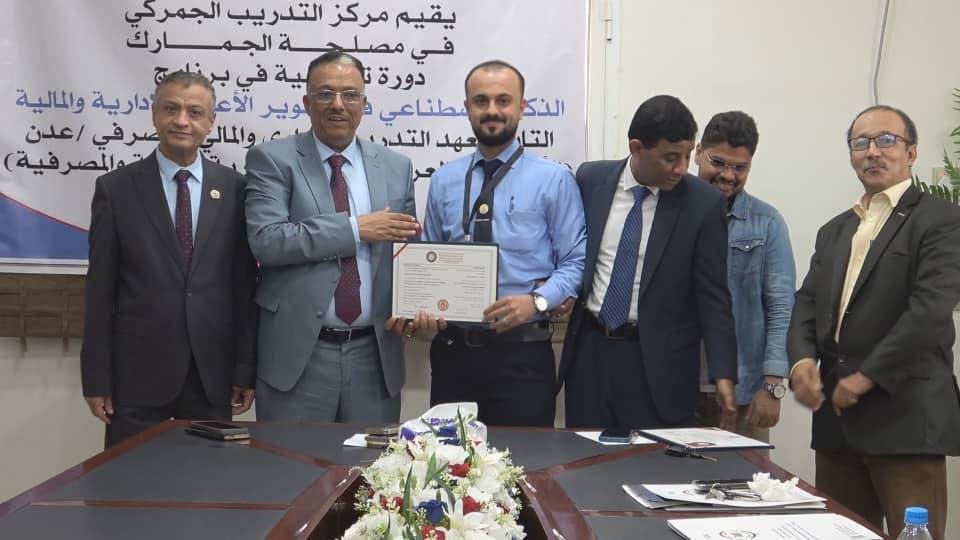
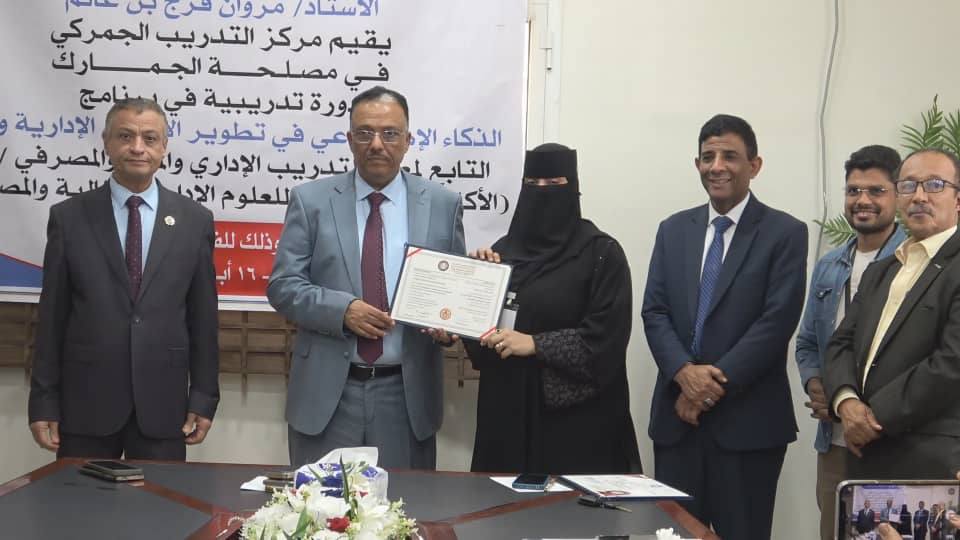
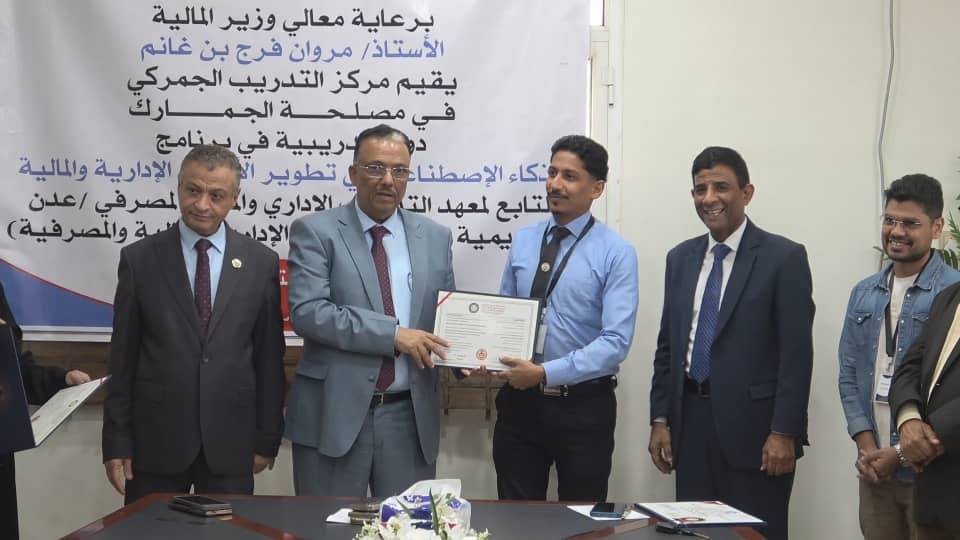
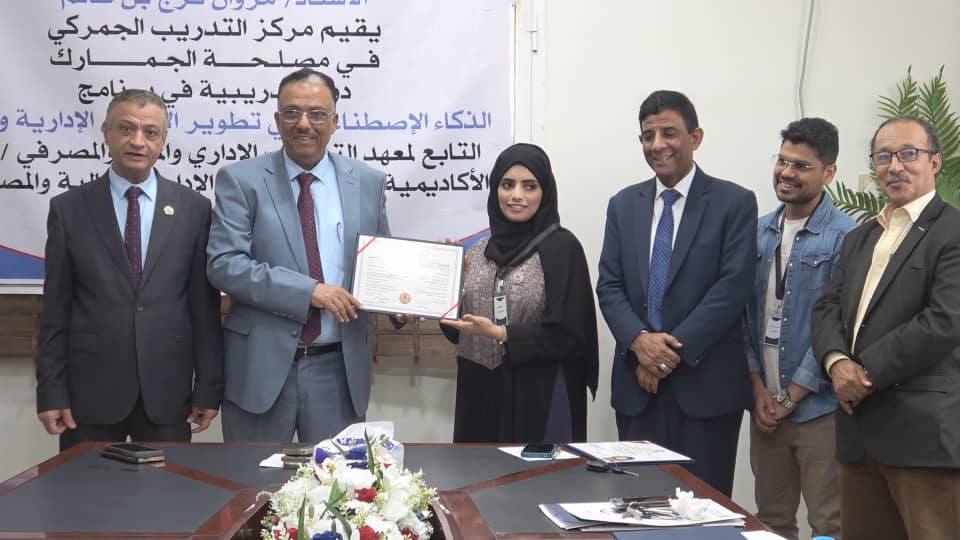
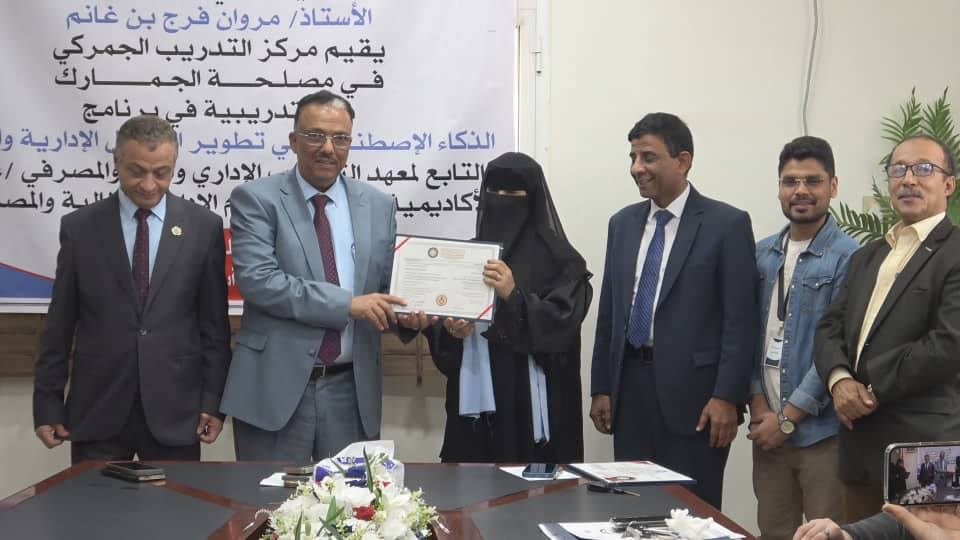
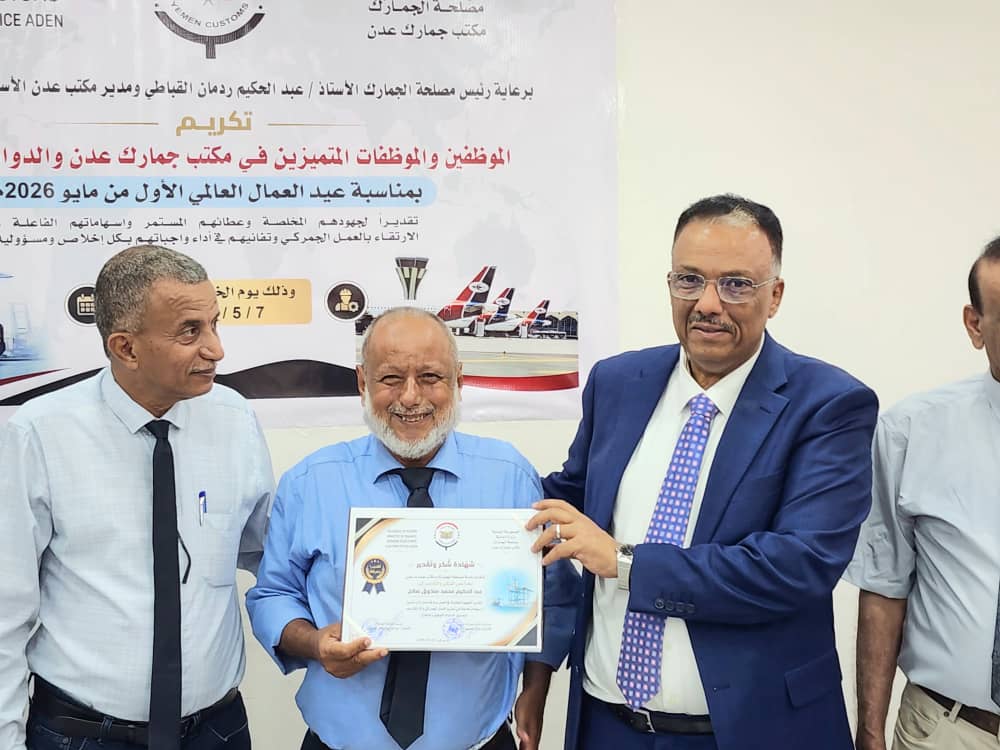
At the end of the course, YCA Chairman, Mr. Abdulhakim Alkubati, distributed certificates of participation to the trainees, expressing his appreciation for their commitment and efforts during the course period.