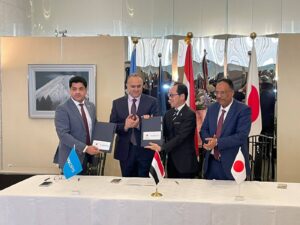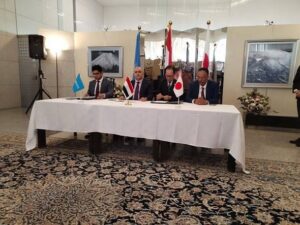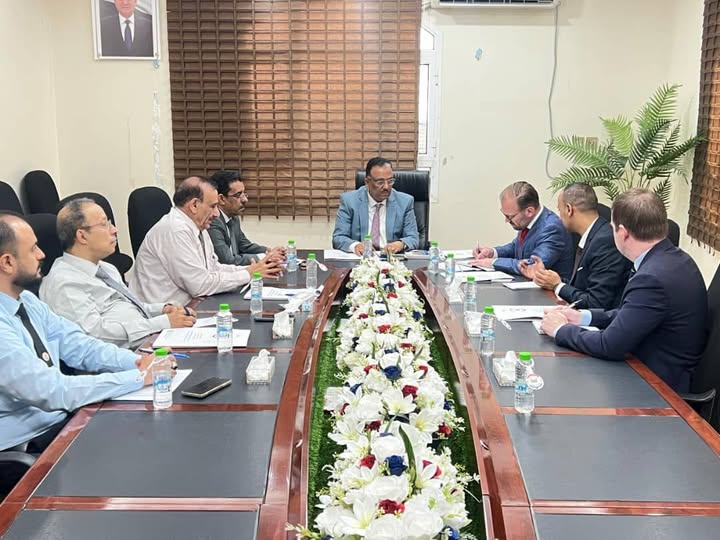


In the Saudi capital, Riyadh, a project to support infrastructure in the Customs Authority, supported by the Japanese government and in partnership with the United Nations Office for Project Services (UNOPS), was signed at a cost of 4 million and 600 thousand dollars.
The signing took place in the presence of Deputy Minister of Finance Mr.Hani Wahab, YCA Chairman MR. Abdulhakim Alkubati, and Japanese Ambassador to the country Yoichi Nakashima.
M.r Mohammed Othman, Regional Director of the United Nations Office for Project Services (UNOPS) in Amman, and a number of stakeholders.
Deputy Minister of Finance Wahab emphasized the importance of this important developmental and vital project that embodies the development of the partnership between the governments of the two countries in Yemen and Japan. He explained that through the implementation of this project, it will help in the implementation of the Yemeni government’s recovery plan, especially the development of infrastructure in the Yemeni Customs Authority.
Wahab, on behalf of the Yemeni government, the Ministry of Finance and the Customs Authority, thanked the Japanese government and the friendly Japanese people for their support for our country’s recovery and development. He expressed his thanks to the United Nations Project Services Program for their interest in implementing this project. He reiterated the Yemeni government’s keenness to ensure the success of this project and provide all aspects of support and facilitation for its activities.
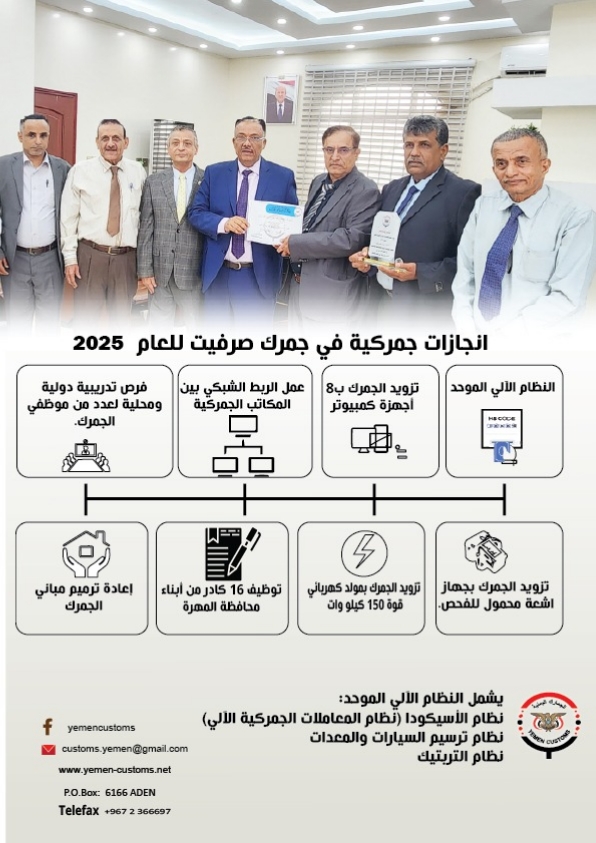
For his part, YCA Chairman Mr. Alkubati emphasized the importance of this vital and strategic project, which targets Aden Free Zone Customs, Shahn Customs in Al-Mahrah Governorate and Al-Wadiah Customs in Hadramawt Governorate with an amount of 4.6 million dollars, stressing that this cooperation will facilitate the flow of trade by introducing tools and devices and improving the customs infrastructure.
ALuKubati also stressed that supporting modern radiology equipment for inspection and building an information center will facilitate customs procedures at the targeted customs outlets, in addition to supporting customs capacity building through rehabilitation and future training represents a “qualitative leap” in the process of modernizing and improving the reformed customs work and will directly contribute to accelerating the flow of trade and combating smuggling to ensure the protection of the national economy and national security.